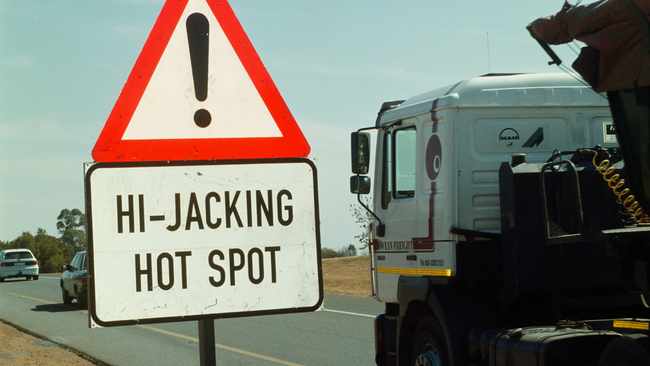
South Africa Truck Hijacking Assessment 2026: Understanding Criminal Patterns, Hotspots and Emerging Threats
An Intelligence Assessment Based on 127 Verified Truck Hijacking Incidents Recorded Between January 2026 and June 2026
Published by Managa Risk Solutions Intelligence Desk
Date: June 2026
Category: Transport Security | Cargo Crime Intelligence | Risk Assessment

Executive Summary
Truck hijackings continue to pose a significant threat to South Africa’s transport and logistics sector. This assessment examines 127 verified truck hijacking incidents recorded between January and June 2026 and identifies recurring criminal patterns, hotspots and modus operandi employed by truck hijacking syndicates.
Key Findings
Firearms were involved in approximately 81.1% of recorded incidents. Gauteng accounted for approximately 70.1% of all incidents. Ekurhuleni was the most affected district with 39 incidents. Friday was the most affected day of the week and the period between 06:00 and 12:00 recorded the highest concentration of incidents.
Introduction
Truck hijackings remain one of the most significant threats facing South Africa’s transport and logistics sector. The analysis indicates that truck hijackings are rarely opportunistic crimes and are often carefully planned operations conducted by organised criminal groups.
Understanding the Threat Landscape
The analysis reveals that firearms remain the primary tool used by offenders to gain control of vehicles and drivers. Criminal groups continue to exploit predictable transport operations and operational vulnerabilities.
Common Modus Operandi Employed by Truck Hijacking Syndicates
Recurring methods include armed vehicle interception, the use of multiple vehicles, driver isolation, road obstruction tactics and the exploitation of operational information. These methods demonstrate coordination and planning.
Geographic Distribution of Truck Hijackings
Gauteng accounted for approximately 70.1% of incidents. KwaZulu-Natal accounted for 7.9%, Eastern Cape 5.5%, Mpumalanga 4.7%, Free State and Western Cape 3.1% each, North West 2.4%, and Limpopo and Northern Cape 1.6% each.
Day-of-Week Analysis
Friday accounted for 24 incidents (18.9%), Tuesday and Wednesday 23 incidents each (18.1%), Monday 18 incidents (14.2%), Thursday 17 incidents (13.4%), Saturday 13 incidents (10.2%) and Sunday 9 incidents (7.1%).
Emerging Threat Indicators
Indicators include increased criminal activity along freight corridors, repeated incidents within specific operational areas, surveillance activity near logistics facilities and the targeting of high-value cargo.
The Role of Intelligence-Led Security
Intelligence-led security enables organisations to identify threats before they materialise through threat monitoring, route risk assessments and early warning intelligence.
Managa Risk Solutions Intelligence Assessment
Managa Risk Solutions assesses with moderate confidence that a significant proportion of truck hijackings involve pre-operational surveillance and prior knowledge of cargo movements. Information vulnerabilities within the logistics environment likely contribute to successful hijacking operations.
Conclusion
The findings demonstrate that truck hijacking remains a persistent and sophisticated threat. Organisations that integrate intelligence into operational planning are better positioned to protect personnel, cargo and assets.

Need Intelligence-Led Early Warning Support?
Managa Risk Solutions provides Early Warning Intelligence Alerts, Route Risk Assessments, Threat Monitoring, Geographic Risk Mapping, Incident Analysis, Strategic Intelligence Reporting and Situational Awareness Reporting.
Disclaimer
This assessment has been prepared by Managa Risk Solutions using verified truck hijacking incident data collected between January 2026 and June 2026.