

Truck hijackings in South Africa are no longer isolated criminal incidents—they are targeted, coordinated, and increasingly predictable.
For security companies, logistics operators, and courier businesses, the real question is no longer “How do we respond?” but rather:
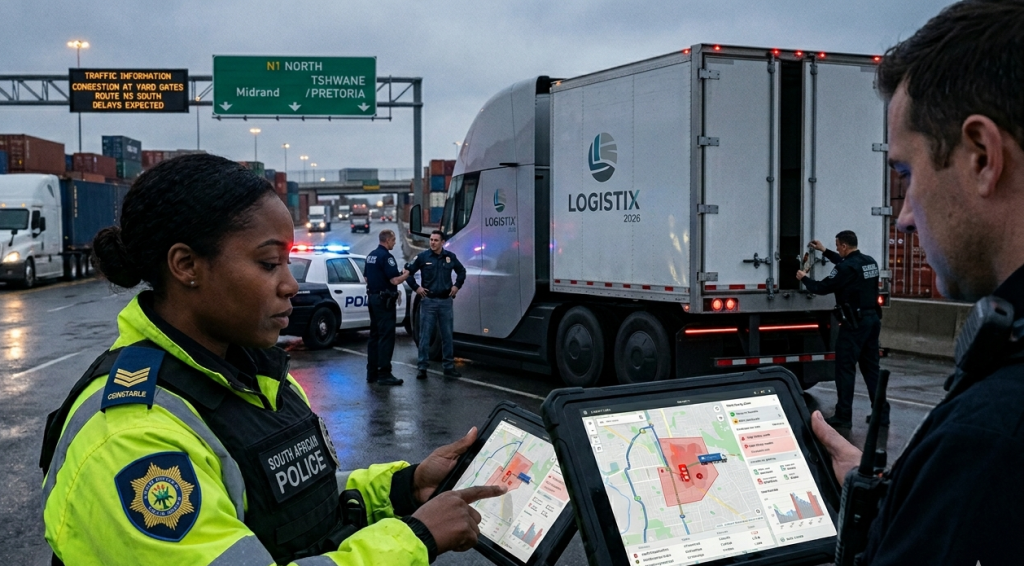
“How do we prevent this before it happens?”
Data-Driven Insight You Can Act On
This analysis is based on 486 verified truck hijacking incidents recorded between 01 January and 16 April 2026.
This provides a current, real-world snapshot of how hijackings are unfolding across key transport corridors—allowing for actionable, intelligence-led decision-making.
Key patterns emerging from the data:
- Gauteng accounts for approximately 66% of all incidents, making it the primary hotspot
- High-risk routes include the N1, N3, N12, and R21 corridors
- Hijackings peak midweek, with Wednesday recording the highest number of incidents, followed by Tuesday and Friday
truck hijackings are not random, they are structured, timed, and geographically focused.
The Reality: Hijackings Are Structured, Not Opportunistic
When incidents are mapped over time, clear trends emerge:
- Repeat hotspots along major economic routes
- Predictable timing windows during operational hours
- Strategic targeting of high-value cargo and routine logistics movements
This is not coincidence, it is planning.
A Glimpse into the Modus Operandi
1. Target Identification – High-value cargo and predictable routes
2. Positioning – Off-ramps, congestion points, fuel stops
3. Interception – Fast, coordinated execution with minimal reaction time
4. Diversion – Immediate exit from primary routes
5. Escape – Movement through secondary roads and industrial zones
Understanding this sequence is critical—because intervention is only possible before step three.
Mini Case Snapshot: How It Happens in Real Life
In a recent midweek incident along the N3 corridor in Gauteng, delivery truck transporting consumer goods was intercepted during early morning operations.
The vehicle had followed a predictable route and schedule, allowing suspects to position themselves near an off-ramp. Within minutes of interception, the truck was diverted off the highway and later recovered in an industrial area and its cargo already removed.
This was not random, it was timed, observed, and executed with precision.

From Insight to Prevention
The companies that successfully reduce hijacking risk are not reacting faster, they are anticipating earlier.
With the right intelligence, it becomes possible to:
- Identify high-risk routes before dispatch
- Adjust timing to avoid peak threat windows
- Monitor emerging hotspots in real time
- Make informed operational decisions under pressure
Managa Risk Solutions provides proactive risk intelligence, not just reporting.
Our approach focuses on:
- Early warning alerts based on real-time patterns
- Route-specific risk assessments tailored to your operations
- Situational awareness reports highlighting emerging threats
- Decision support intelligence for logistics and security teams
We don’t just tell you what happened, we help you prevent what’s next.
Real Impact on Your Operations
Clients benefit from:
- Reduced exposure to high-risk routes
Improved planning and dispatch decisions - Fewer operational disruptions
- Increased driver and asset safety
Limited Offer: 3-Week Early Warning Trial
To demonstrate the value of proactive intelligence, Managa Risk Solutions is offering a 3-week free early warning service, including:
- Weekly unrest and hijacking risk reports
- Route-specific alerts
- Emerging hotspot identification
This is designed to give your team practical, real-world insight and not theory.
The Bottom Line
The companies that prevent hijackings are not lucky, they are informed.
The patterns are clear. The risks are predictable.
The only question is:
Will you act before the next incident or after it?
Request your free 3-week early warning trial:
www.managarisk.co.za
info@managarisk.co.za
067 712 8472