By Founder of Managa Risk Solutions
A property can look perfect at a viewing. The price is right, the finishes are good, the neighbourhood seems fine. But one question is rarely asked: what is the risk environment around this property?
A Property Risk Intelligence Assessment (PRIA™) answers that. It gives a structured, intelligence-based view of the risks around one specific address, not a generic suburb-wide crime report.
Why suburb-level statistics are not enough
Consider two houses in the same suburb, with the same asking price and the same number of bedrooms.
House A sits on a quiet residential street with a single access road. House B is four blocks away, close to a busy intersection, a taxi rank and an open piece of vacant land. On paper, both are in the same suburb with the same crime figures. In reality, their risk environments are very different. (This is an illustrative example, not a real property.)
A PRIA is built to show that difference before you commit to buying, selling, lending on or insuring a property.
What a PRIA checks
- Crime patterns. We analyse recorded incidents to find recurring patterns: which types of crime occur, when they peak, and where they concentrate. The goal is analysis, not a list of numbers.
- Immediate surroundings. Risk varies within a suburb. A property on a busy main road near a commercial node faces a different environment from one in a quiet cul-de-sac a few blocks away. PRIA looks at the street, not just the suburb.
- Nearby hotspots. We identify where incidents cluster and how close those areas are to the property. A nearby hotspot doesn’t make a property unsafe, but it is context every buyer should have.
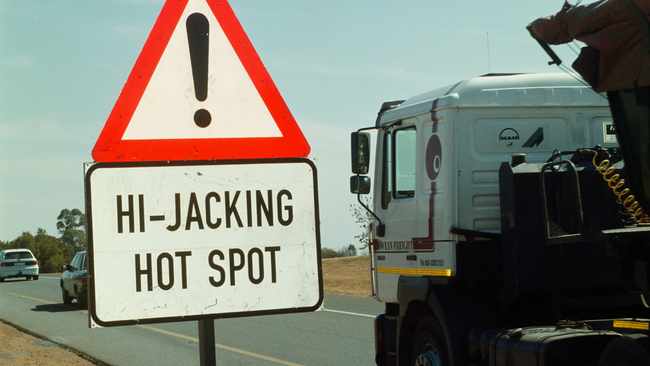
- Access and routes. Major roads, intersections, transport corridors and open access points affect how people and vehicles move through an area, and therefore the property’s exposure.
- Emerging risk indicators. Crime patterns shift. Where information is available, PRIA flags early signs of change so the assessment doesn’t rely only on historical conditions.
- The wider environment. Schools, shopping centres, taxi ranks and stations, industrial areas, vacant land and neighbouring businesses all influence movement and activity around a property.
Information vs. intelligence
Crime statistics tell you what was recorded. Intelligence places that information in context and connects it to a specific property and decision. Every PRIA works through six questions:
- Location: where are incidents concentrated relative to the property?
- Pattern: what types of incidents recur, and when?
- Exposure: which users, assets, routes or operations could be affected?
- Implication: what could the pattern mean for access, continuity or the tenant and visitor experience?
- Early warning: what indicators should be monitored going forward?
- Advice: what practical action, further due diligence or monitoring is warranted?
What it looks like in practice: a Brooklyn demonstration
To show how this works, we analysed a three-month dataset for the Brooklyn area in Pretoria (1 January to 31 March 2026). It contained 1,754 unique records across 64 suburbs. Here is what the analysis surfaced:
- Property and asset crime is a major theme: 791 records, or 45.1% of the dataset, fall under our PRIA™ property/asset classification.
- Vehicle exposure needs attention: 257 records sit in the vehicle-theft cluster, including 111 vehicle and motorcycle thefts, 88 thefts out of vehicles and 39 attempted vehicle thefts.
- Robbery is material: 130 robbery records, including common robbery, house robbery and robbery with a firearm.
- Incidents are concentrated: the top five suburbs account for 47.8% of records, and a handful of named streets appear far more often than others.
- Timing creates monitoring windows: the 16:00 to 19:59 period holds 378 records (21.6%), and 29.8% of records fall on weekends.
- Recorded volume is rising: from 467 records in January to 656 in March, an increase of about 40.5%.
That last figure comes with an important caution. It shows a change in recorded incidents, not automatically a change in underlying crime, because population, reporting and recording conditions are not available in the data. Good intelligence is honest about what the numbers can and cannot say.
The demonstration also translates these findings into a simple attention dashboard. It is framed as an analytical attention level, not a probability-of-loss score:
| Risk / intelligence domain | Attention level | Evidence in dataset |
| Property / asset crime | HIGH | 791 records (45.1%) |
| Vehicle / access exposure | HIGH | 257 vehicle-theft-cluster records |
| Fraud / commercial exposure | HIGH | 304 fraud records |
| Robbery / personal security | MODERATE–HIGH | 130 robbery records |
| Public-order / substance indicators | MODERATE | 228 records in classification |
| Trend monitoring | HIGH | Recorded volume up 40.5%, Jan to Mar |
Source: Managa Risk Solutions PRIA™ Brooklyn Area Intelligence Demonstration. Demonstration data only; it does not describe any individual property.
How it works
- You provide the property address and your role (buyer, seller, investor, agent, valuer).
- We gather and analyse information using recorded incident data for the surrounding area, examined by location, incident type, month, day and hour, together with relevant mapping and site context.
- We deliver a written report with findings, key risk indicators and practical observations, normally within 3 to 5 working days of receiving the property address.
- You use it in your decision, alongside your inspection, legal checks and valuation.
What you receive
- An overview of the risk environment around the property
- Identified crime patterns, nearby hotspots and street-level concentrations
- Time-based patterns and monitoring windows
- Notes on vehicle exposure, access, surrounding routes and environmental factors
- An early-warning view of what to monitor after the transaction
- Clear, plain-language conclusions, not raw data
Early warning: looking forward, not just back
A property-specific PRIA can turn a historical baseline into forward-looking monitoring. Examples of what can be watched:
- Repeated incidents within an agreed geographic buffer around the property
- Emergence of a new crime pattern affecting the property type or its access routes
- Clusters of vehicle-related incidents near parking or approach corridors
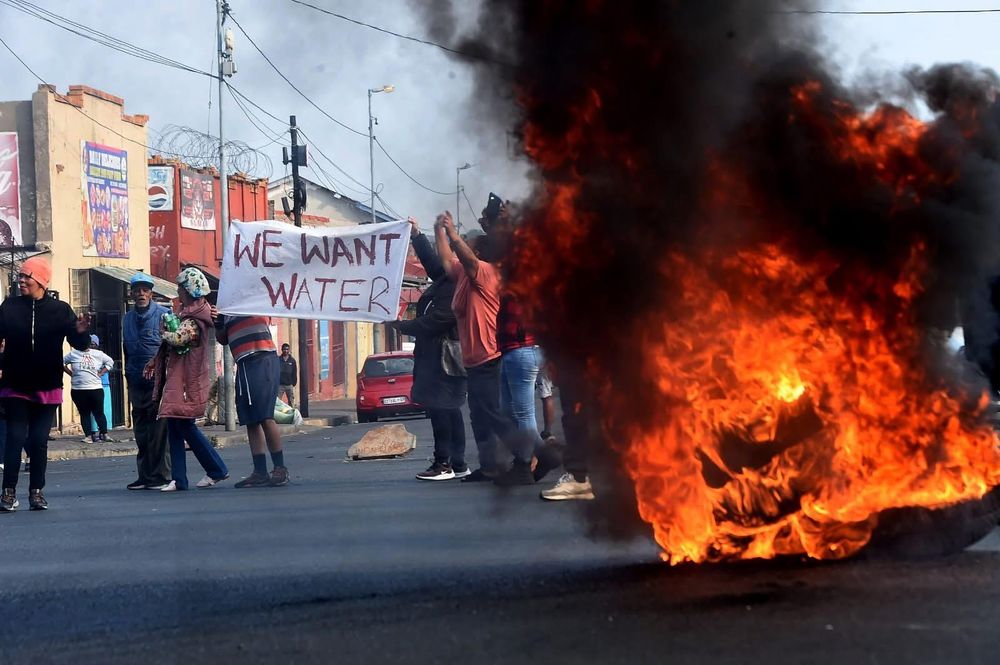
- Protest, public-disorder or road-disruption indicators affecting access
- Material changes in incident volume or severity
Who benefits
- Buyers: identify material risk indicators before a transaction decision
- Sellers: give prospective buyers transparent, credible information
- Investors and portfolio managers: strengthen location due diligence and compare properties across a portfolio
- Estate agencies: offer a value-added service and show a broader understanding of the asset
- Property valuers and evaluators: add a separate intelligence layer on the operating environment around the asset
- Tenants and occupiers: get evidence-based context for operational and safety concerns
- Banks and insurers: use location-based risk context to decide where deeper specialist review is warranted
What PRIA does not do
A PRIA does not guarantee that a property is safe or unsafe, and it does not predict that a specific crime will happen at a specific address. Its accuracy depends on the information available, and recorded incidents do not capture everything.
PRIA is an intelligence and risk-advisory product. It is not a property valuation, engineering inspection, environmental impact assessment, legal opinion, insurance underwriting decision or PSIRA-regulated security service. It adds one more layer of information to support a better decision.
Frequently asked questions
Is a PRIA the same as a crime statistics report?
No. Statistics show what was recorded for an area. A PRIA analyses information around a specific property and explains what it means for that location.
Does a high-attention result mean I shouldn’t buy the property?
Not necessarily. A PRIA gives you information, not a verdict. Many buyers use it to negotiate, plan security measures or compare properties.
Can I order a PRIA for a property I don’t own yet?
Yes. It is most useful before you commit, so you can order it for any property you are considering.
Can agents and sellers order one to share with buyers?
Yes. Sharing a PRIA can build trust and answer buyer questions early in the process.
How long does it take?
Normally 3 to 5 working days from receiving the property address.
The goal is informed decisions
When you buy a property, you’re not only buying bricks, walls and land. You’re buying into a location.
Property value + property context + risk intelligence = a stronger decision.
Give Buyers More Than a Property. Give Them Confidence.
Property Risk Intelligence Assessment (PRIA™)
Managa Risk Solutions | Detect. Analyze. Advise.
www.managarisk.co.za
info@managarisk.co.za
WhatsApp/Call: 067 712 8472